

Who's Your (Altruistic) Daddy?

Updated: Feb 6
Familial kindness correlates with paternity uncertainty
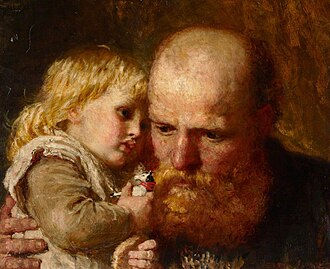
Most species of mammals and birds – indeed, even some species of fish – exhibit biparental care of offspring, though the investment in time, energy & resources is typically uneven between mom and dad. The balance of more versus less investment is a function of ‘parental certainty’: to what degree am I, as a mom or a dad, confident that this kid is mine? In evolutionary terms the equation is even more elementary – are my genes present in this product of procreation? If the answer is yes, then it clearly makes sense to invest in the kid, though one’s confidence in that answer will be significantly influenced in the case of slow developing (altricial) species whose offspring require considerable care for a long period of time. Such as humans.
For mammals, moms will have as high a degree of parental certainty as can be had – it was her womb that conceived, nourished and eventually gave birth to her offspring. Such certainty echoes the reality that, beginning with conception, female investment in reproduction far exceeds that of males. On the other hand, parental certainty for dads is much less, though some strategies – such as monogamous pair-bonding or sexual control of females in male-dominate social groups – increases the odds. Even in the former, however, it is estimated that males significantly invest in offspring in less than 60% of (mammalian) monogamous species.
Of course, for humans social, cultural and religious norms and structures, writ large, have much to say about paternal certainty. But at the bottom line, men can never be 100% assured of paternity. Since mothers enjoy parental certainty while males do not, given that her evolutionary goal is to ensure as far as possible that her offspring also successfully reproduce, mom’s ‘genetic fitness’ may benefit more from investing in existing children rather than having more babies [see footnote 1]. A ‘bird in the hand’ scenario. The opposite is true for males, especially if parental uncertainty is high for that individual. In this case, their option is to seek additional mating opportunities, a case of ‘playing the odds ’ that one or more resulting children will indeed carry his genes forward.
Interestingly, investing in the well-being of children extends beyond mom and dad, to include siblings (especially full siblings), grandparents, aunts, uncles … even cousins. As might be expected, maternal relatives are known to invest more than paternal relatives (they are, after all, related to the parent with complete parental certainty!), furthermore, maternal grandmothers even more so than maternal grandfathers! As noted previously regarding paternity certainty, “offspring investment decisions” across generations invoke numerous factors beyond genetic relatedness, e.g., social structure, religious norms etc., even extending to emotional ties and degrees of affection [see footnote 2]. Does all of this make sense? At this point, it is time to introduce the idea of kin selection…
In evolutionary biology, kin selection theory argues that you should offer more support to those more closely related to you. This acknowledges that these individuals share a higher proportion of the same genes as yourself, with the objective of your beneficence being to have those genes appear more frequently in subsequent generations. This confers greater inclusive reproductive fitness, since their offspring will include at least some of your genes! Support for others through some altruistic behavior on your part will necessarily exact a cost for yourself [see footnote 3]. Way back in 1964 British evolutionary biologist William Donald Hamilton captured this relationship with an eloquently simple equation: r x B > C, where r is the genetic relatedness between you and your relative, B is the benefit received by that said relative, and C is the cost to you. Thus, we have Hamilton’s Rule [see footnote 4].
The very core of altruistic conduct manifests as kindness, which leads us to consider a recent study by Czech researchers Radim Kuba and Jaroslav Flegr. Kuba and Flegr were interested in understanding how paternity uncertainty (PU) might color perceptions of kindness within families. They posed a simple question, predicting that “…relatives with lower PU would be rated as kinder than those with higher PU.” A total of 9,128 subjects were enrolled in the study through a rather novel approach: an open invitation on the Facebook Lab Bunnies page, dedicated to “Czeck and Slovak volunteers interested in participating in various evolutionary psychology experiments”. Participants completed an online anonymous survey, evaluating kindness of family members (biological parents, grandparents, siblings and step-relatives, the last providing ‘negative controls’ as they would have maximum paternal uncertainty). The survey included questions such as “maternal grandmothers are kinder than other people” and “is this person on average kinder than other people” [asked regarding a specific familial category, e.g., of a ‘biological mother’ or ‘biological grandfather – patrilineal’]. Kindness as a concept was left open for each participant to “draw upon their own experiences” with respect to emotional support, material assistance and/or positive social interactions. Three levels of paternity uncertainty were identified based on familial relationships: “zero PU” for biological mothers and biological maternal grandmothers; “1 PU” for biological fathers, biological paternal grandmothers and biological maternal grandfathers’, and finally “2 PU” for biological paternal grandfathers [see footnote 5].
As predicted based on Hamilton’s Rule, biological mothers rated as the ‘kindest family member’ followed by her mother (the maternal grandmother). Interestingly, even though both individuals have zero PU, mom was found to be significantly more kind than grandma! Also as expected, for family members with one level of PU, mom’s dad was found to be kinder than dad or even his grandmother. And dad’s dad (paternal grandfathers having 2 PU) was rated least kind among all parents and grandparents. The rating of kindness between the different levels of PU were significantly different (0 > 1 > 2). Siblings, whether older or younger, were found to be less likely to be ‘kind’ than any category of parent or grandparent, though sisters were seen to be slightly more kind than brothers. Stepfamily members had the lowest kindness ratings of all, as would be predicted having no biological relationship with the study participants, but perhaps interestingly the familial category with the lowest rating were stepmothers.
So, these findings certainly support the thesis that paternity uncertainly influences perceptions of kindness within families, but the differences are also interesting. For example, both mom and her mom have 0 PU, but were rated significantly different in terms of kindness – how so? Well, moms are not only more involved in their child’s care than grandma is, but she is also more closely related genetically (on average sharing 0.5 versus 0.25 of DNA respectively). Perhaps more importantly, as Kuba and Flegr suggest, is that mom has “insider information” about her kid’s paternity that grandma lacks. That is, mom knows who her child’s father is, but grandma’s knowledge is based on what her daughter tells her.
It would, of course, be absurd to reduce humankind’s penchant to perform altruistic acts to an assessment of biological paternity. The study’s authors themselves note that models such as Hamilton’s Rule and kin-selection theory do not capture the immense complexity of social and cultural norms in shaping ‘patterns of helping’ that are “learned, reinforced, and regulated by the surrounding society”. How does one parse the level of maternal kindness due to biological evolution (genetics) versus social evolution (genders roles)? As Kuba and Flegr remind us “PU-based kin discrimination is only one piece of a broader explanatory mosaic for human altruism”.
Footnote 1. When resources (energy / time / food etc.) are finite, and assuming equanimity, every additional child will reduce resources available to each.
Footnote 2. A lengthy discussion could be had here regarding the evolution of human male and female mating strategies, including ‘extra-pair’ (non-monogamous) mating as the human ancestral norm, but that is far beyond our current focus.
Footnote 3. Altruistic acts take many forms, and what we are talking about here is generally referred to as ‘kin altruism’. Of course, we might help others because at some point we expect they will return the favor (reciprocal altruism), because we share some form of common identity, say religious affiliation (group altruism), or as an act of empathy toward someone completely unrelated to us (pure altruism).
Footnote 4. More precisely, benefits and costs per Hamilton’s Rule are measured in additional offspring produced by the receiver thanks to your kindness (equals B), offset by the offspring lost to you because of that same act (equals C). Example: I do something to help my sister (r = 0 .5) have 3 additional children (B = 3), but in doing so I forgo that second child my wife and I were planning to have (C = 1), thus (0.5 x 3) = 1.5, and since 1.5 > 1.0 natural selection should favor such altruistic behavior whenever possible.
Footnote 5. A biological maternal grandmother knows with certainty that her daughter – the biological mother – is her own child, and thus her daughter’s children will also be known with certainty to be her grandchildren. And a biological paternal grandfather – 2 PUs – cannot be certain that his son is his child (this is the ‘first PU’) and thus cannot also be certain that his son’s children are his grandchildren (the ‘second PU’).
Where to find the Science:
Kuba, R and Flegr, J (2025) The evolutionary roots of familial altruism: paternity uncertainty shapes patterns of kindness. Evolutionary Psychology July-September 1-16. https://dx.doi.org/10.1177/14747049251357493
See also:
Bishop, DI et al. (2009) Differential investment behavior between grandparents and grandchildren: the role of paternity uncertainty. Evolutionary Psychology 7 (10: 66-77.
Jeon, J and Buss, DM (2007) Altruism towards cousins. Proceedings of the Royal Society B 274: 1181-1187. https://dx.doi.org/10.1098/rspb.2006.0366


Comments